
The FA’s Grassroots player profile
Designing a player profile that leverages data from the entire FA ecosystem.
A little intro to the FA
The Football Association (FA) is the governing body for all football related matters in England. They’re also known for being responsible for disciplinary matters, for example what happens when players or coaches are sent off with a red card.
The FA’s main goal is to make grassroots football and the national teams accessible to everyone.
To achieve this, the FA in collaboration with Zone and Cognizant had previously launched two websites: England Football and Find Football. Their aim being to encourage more people play football, engage with the England team, and bridge the gap between grassroots and professional football.

Project goal
Empower grassroots players and coaches with accessible performance data to accelerate skill development and improve training quality.
Objectives:
Player development: Enable players to understand and act on their performance data (e.g. touches, passes, positioning)
Increase participation: Make football more engaging and motivating through measurable progress
Coach enablement: Provide actionable insights to plan more effective, personalised training sessions
FA and partners: Navigate across different apps and journeys within the FA ecosystem, as well as drive traffic to partner sites
Success metrics:
Increased participation
Weekly session attendance
Returning players over a season
Player improvement - Players show measurable improvement in key metrics (eg goals scored)
Increased incoming traffic to other FA apps and partner sites
Team: Visual designer, Developers, Business analyst, Product manager, Design director, Content strategist
Part 1 - Understand
1. Ideation workshop
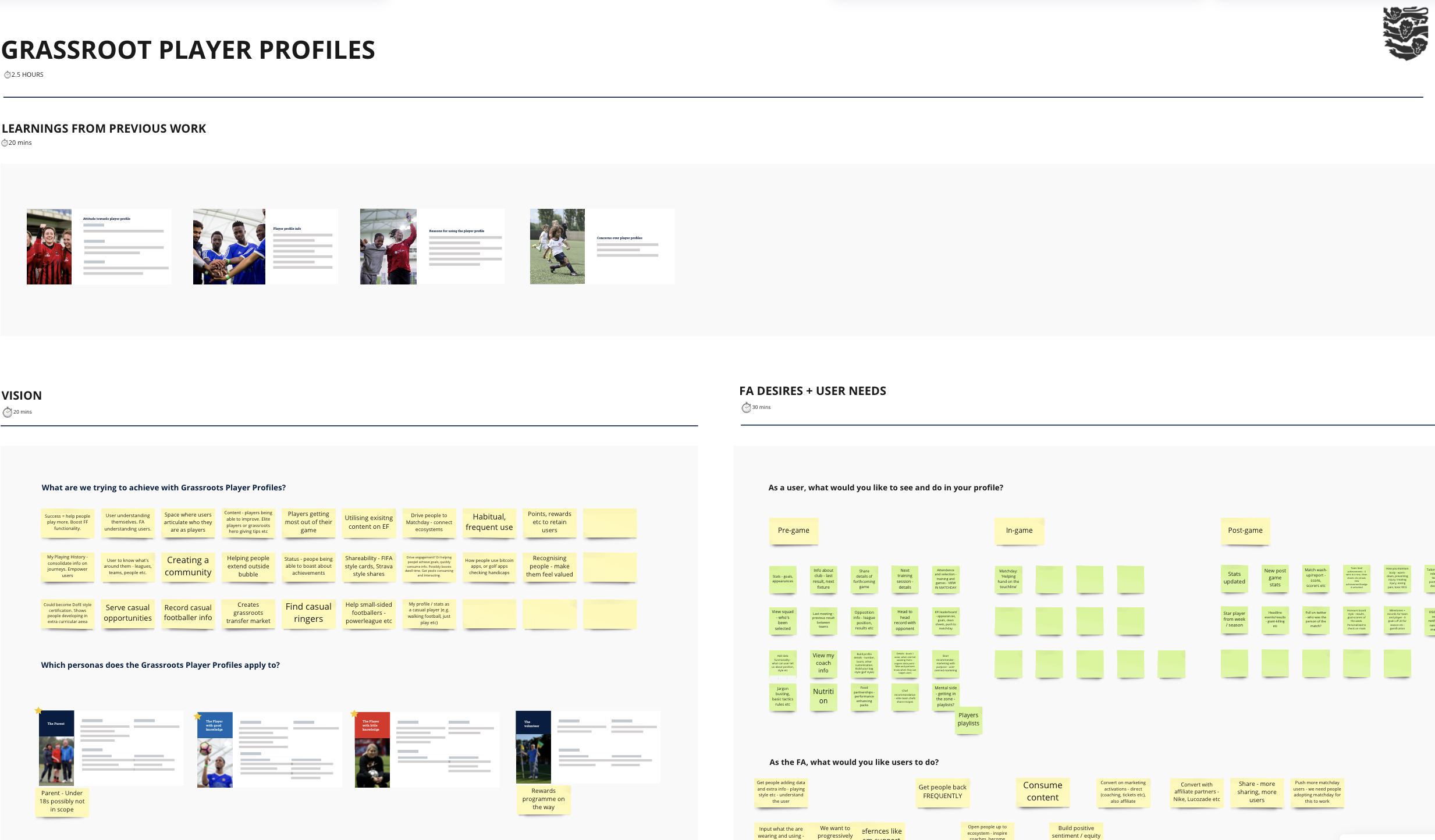
In order to get a good grasp of the requirements and the surrounding context of this piece of work, the Content Strategist and myself planned and conducted a workshop with the business stakeholders, where we covered areas such as
previous research ,
project vision,
audience,
business and user needs,
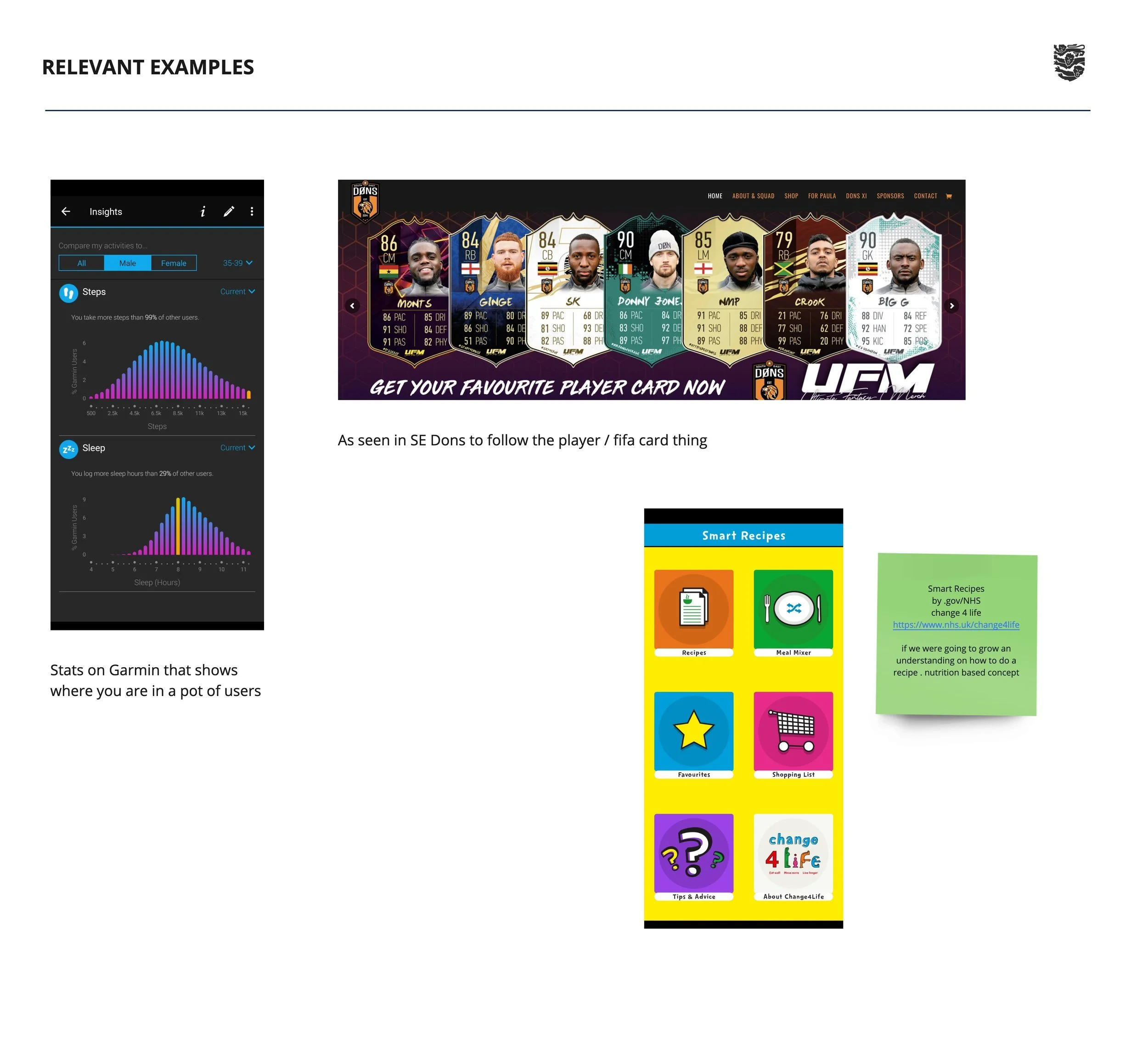
ideas from competitors,
information we can leverage from other FA products
2. Follow up workshop to understand boundaries between Player profile and existing Matchday app
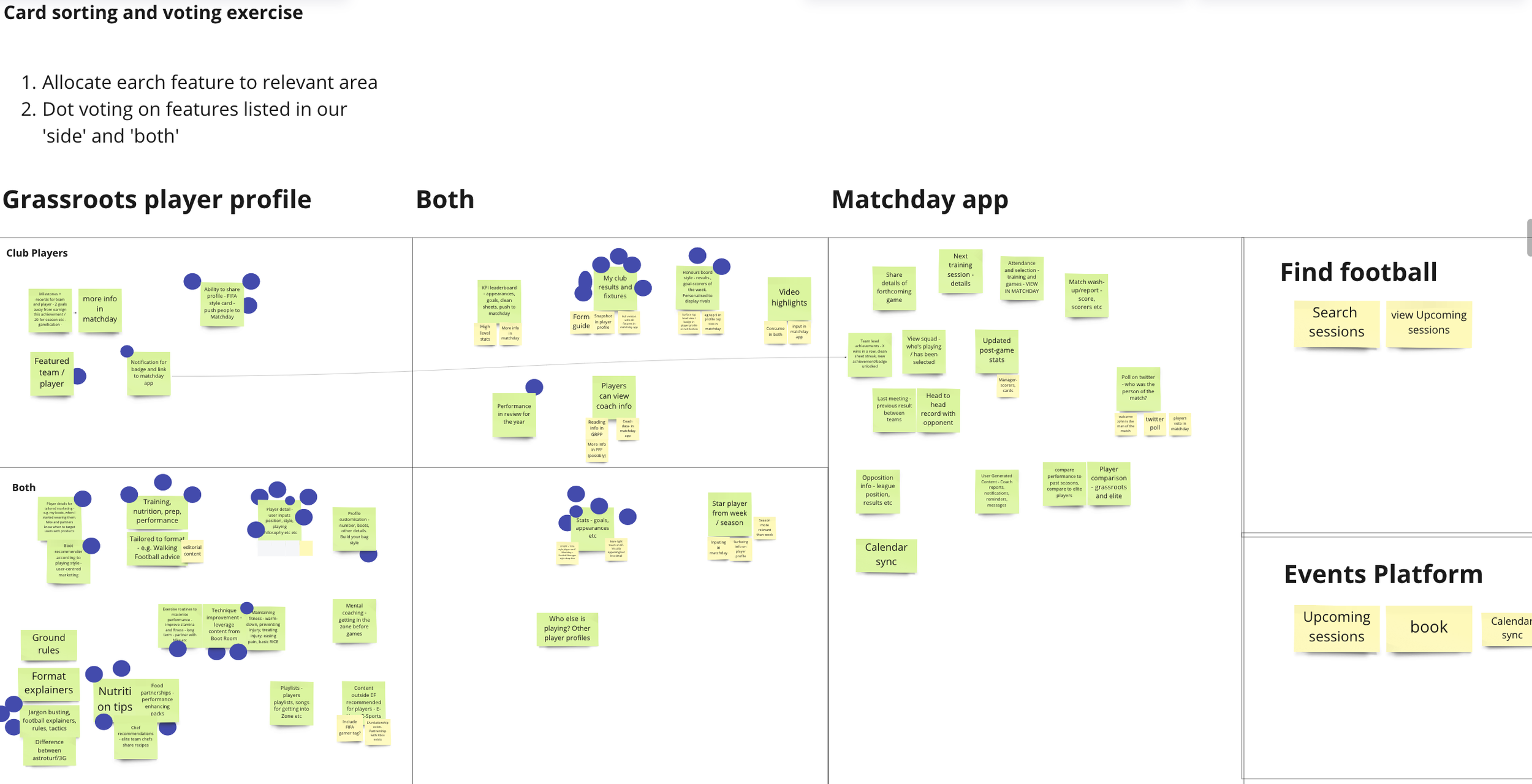
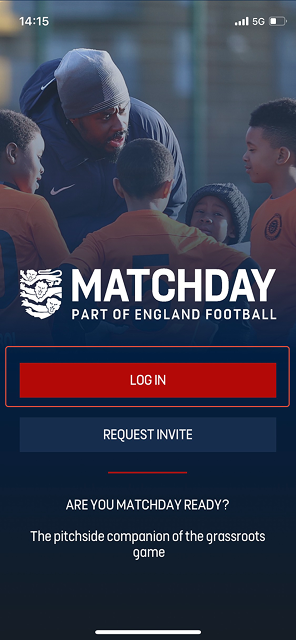
After identifying that the existing Matchday app provided partial access to player data, it became clear that the overlap between platforms was creating significant friction. This duplication didn't just complicate internal workflows; it posed a genuine risk to the user experience by creating confusing, fragmented journeys and redundant functionality across the FA's digital ecosystem.
To resolve this, I facilitated a second cross-functional workshop aimed at streamlining our digital architecture. By the end of the session, we successfully defined the boundaries between the Player Profile and the Matchday app, ensuring all stakeholders were aligned on specific roles, responsibilities, and data ownership. This clarity ensures a more seamless journey for the user and a more efficient roadmap for our internal teams.
Requirements from the workshops
Playing stats
Users should be able to view their playing stats by leveraging various FA products
Visual performance
Users should be able to view their playing stats by leveraging various FA products
Minimum age
For safeguarding reasons the players needed to be over the age of 16
Gamification
An element of gamification should be included to encourage users to return to their playing profile
User value
The profile should help users understand themselves better, while also giving the FA a better understanding of its users.
Tips and videos
The profile should offer tips and videos on how to improve performance
Grassroots communities
The profile should connect grassroots football communities.
FA ecosystem
The profile should encourage users to navigate across different apps and journeys within the FA ecosystem, as well as driving traffic to partner sites.
Part 2 - Design
2. Analysis of data points
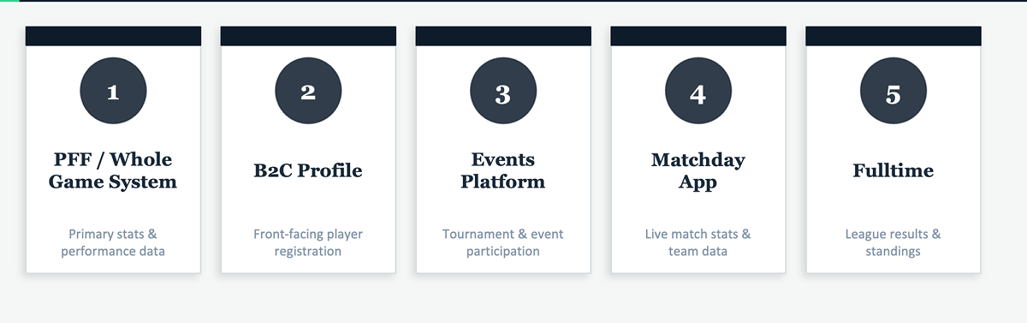
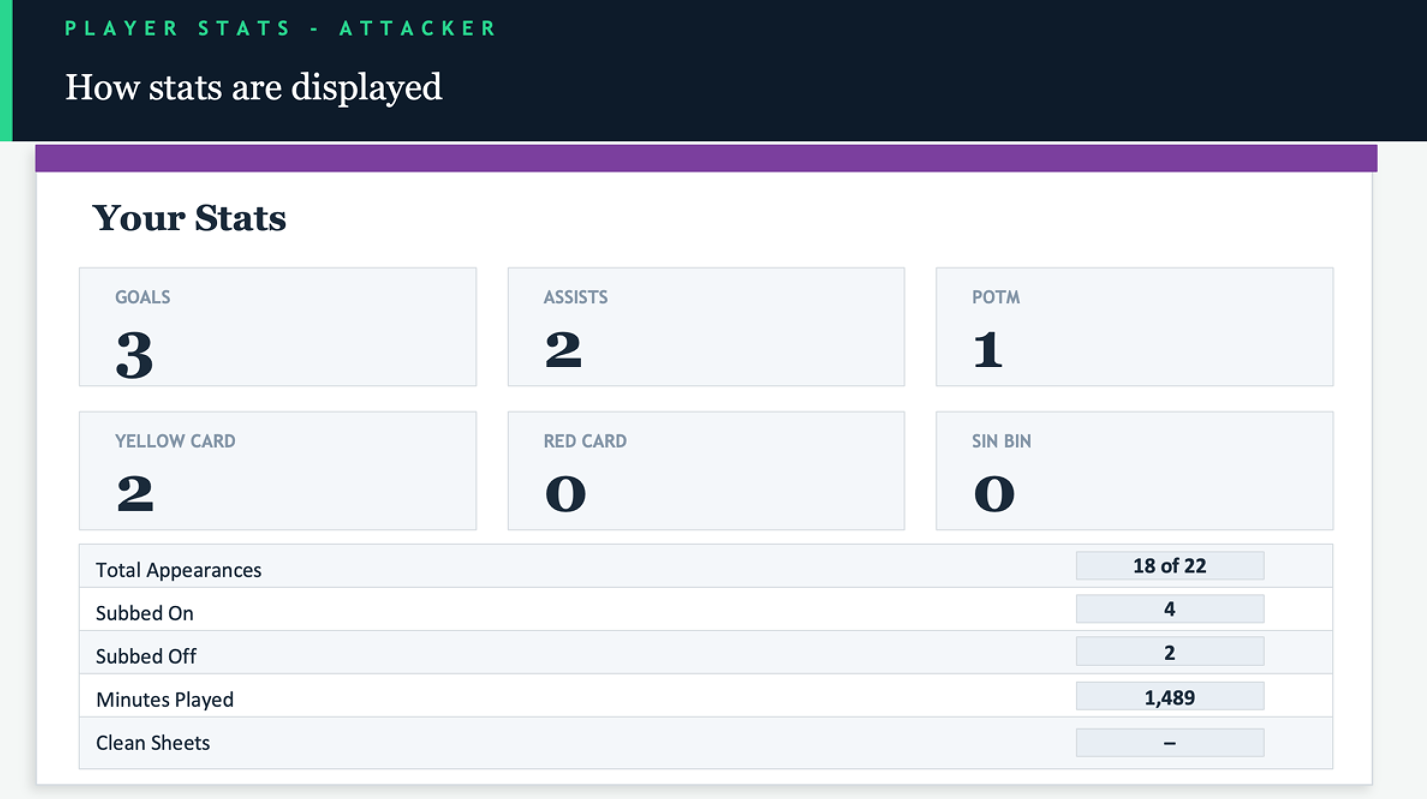
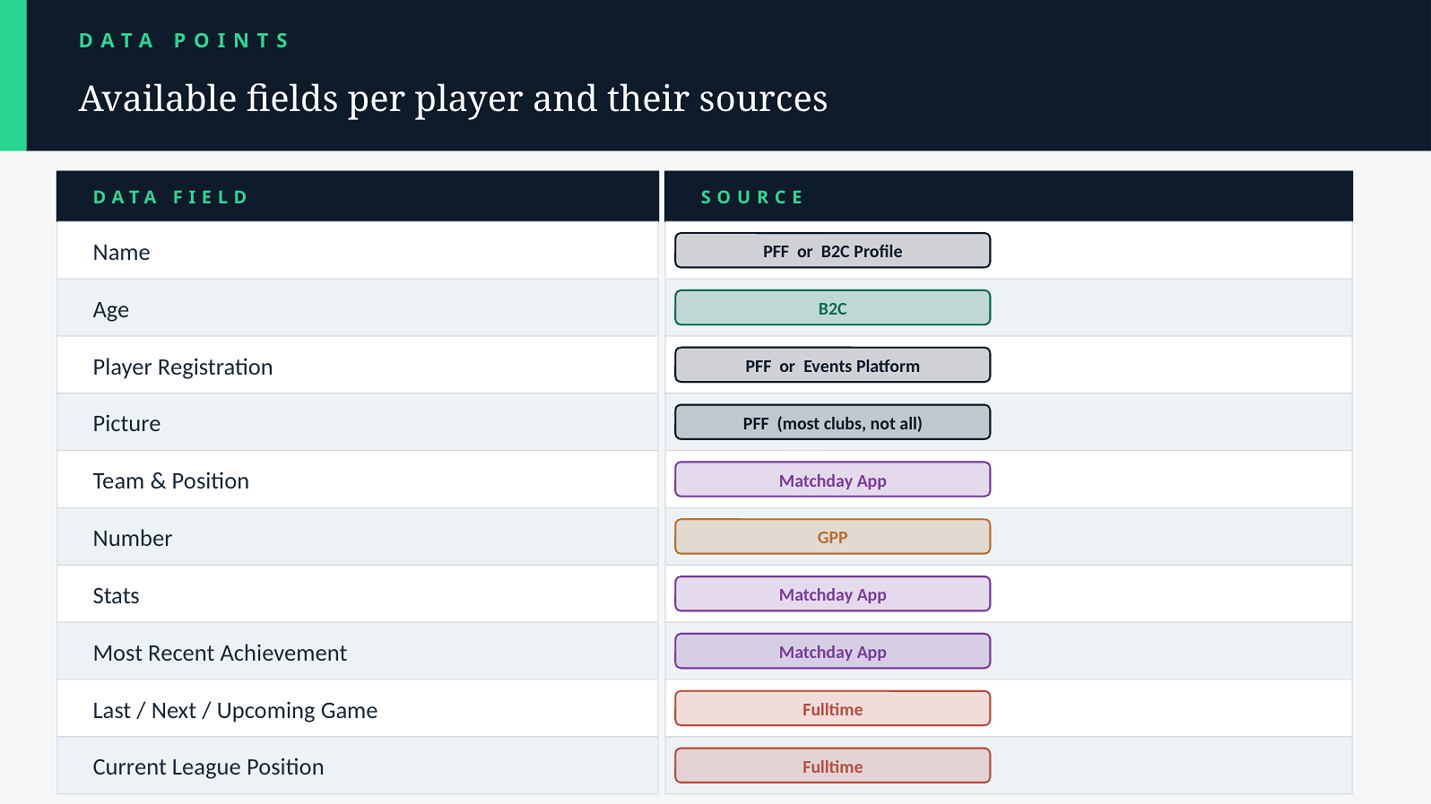
The business analyst and myself started an exhaustive audit of the FA's digital ecosystem to map out every available data point and potential use case. This foundational analysis allowed us to move beyond a "one-size-fits-all" approach and instead treat player data as a dynamic asset tailored to the individual.
By synthesizing these diverse data sources, we developed a comprehensive proposal that establishes specific data sets for various player scenarios. These sets are intelligently segmented based on the player’s age, field position, and the specific type of football they play, ensuring that the information surfaced is always relevant and actionable for the user.
2. Information architecture
Where it lives and why
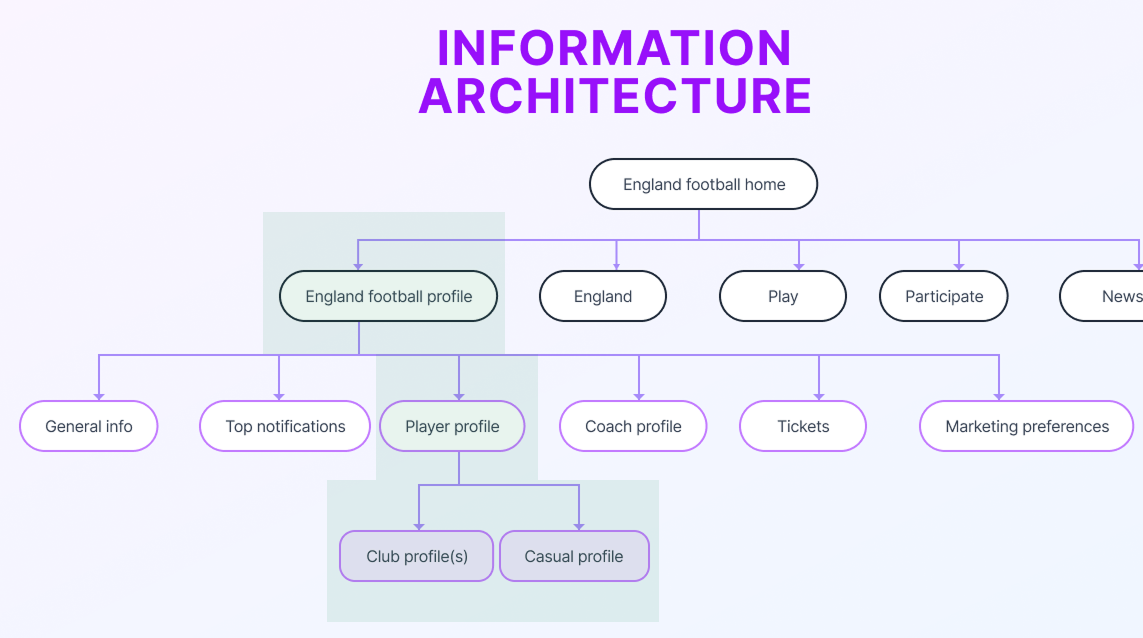
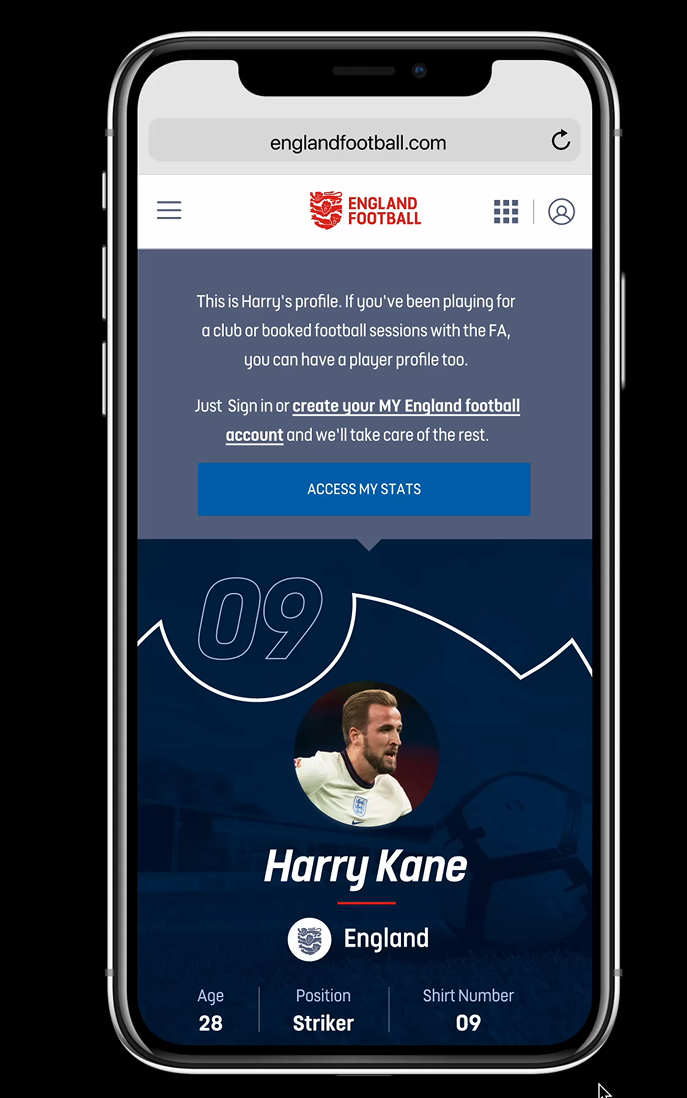
When it came time to decide where to put the Player Profile, I looked at a few different spots across the platform and ultimately decided to tuck it into the User Profile area on EnglandFootball.com.
The reason for this was pretty simple: it’s where users naturally expect to find their own info. Putting it there keeps everything feeling consistent and makes it easy for people to discover without having to hunt for it. Plus, it gives us plenty of room to grow and add more features down the road without cluttering the rest of the site.
3. Sketches
sed quick, low-fidelity sketches to get my ideas down and play around with them without getting bogged down in the details. I treated these sketches as a way to intentionally explore different paths, rather than trying to make things look perfect right away.
This gave me the freedom to test out several directions for how to organize things like stats, fixtures, and player identity. By sketching fast and iterating early, I was able to figure out the best navigation and structure before committing to a final design

4. Low and mid-fidelity designs
I took those early sketches and turned them into structured wireframes to map out the core layout and the main parts of the Player Profile. This was when I really started figuring out the best entry points and how to organize the information so it made the most sense to the user.
By focusing on the wireframes first, I could make sure the structure was solid and worked well. That allowed me to catch any issues and reduce the risk of having to fix big problems later, before putting in all the effort into the final visual design.
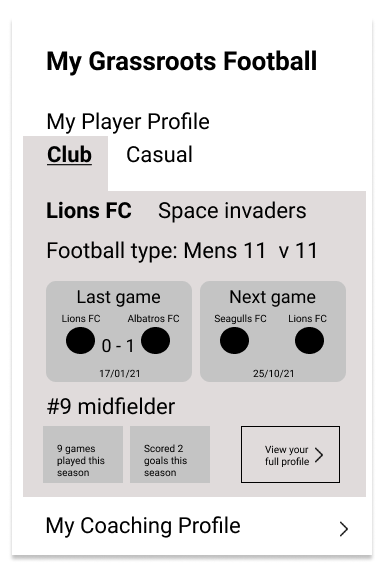
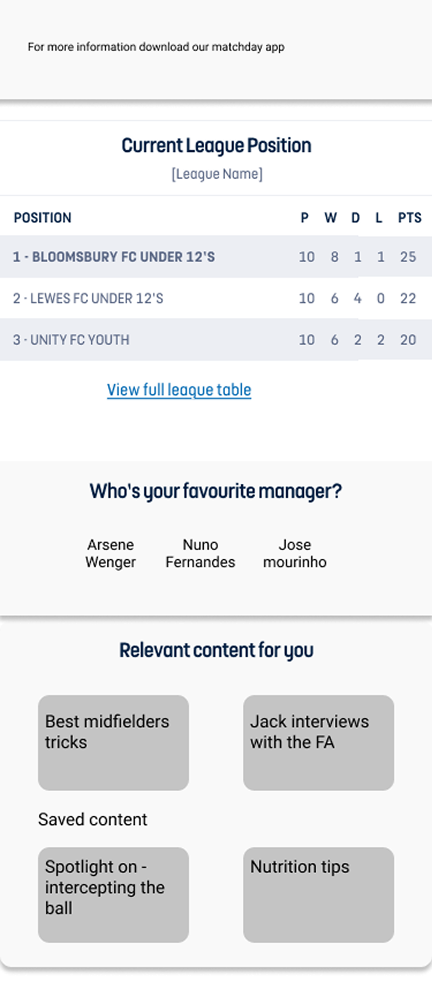
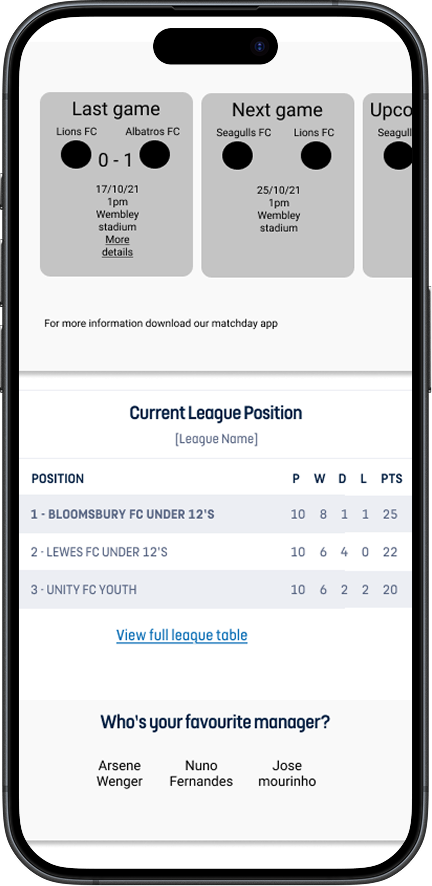
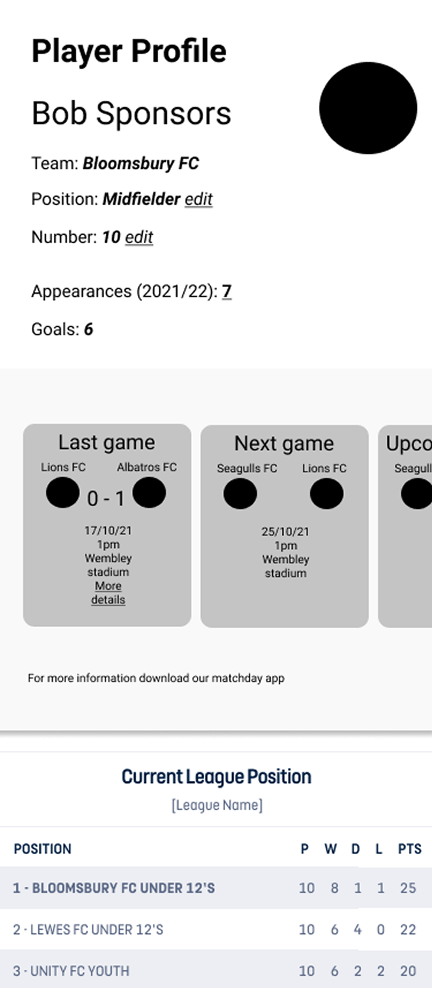
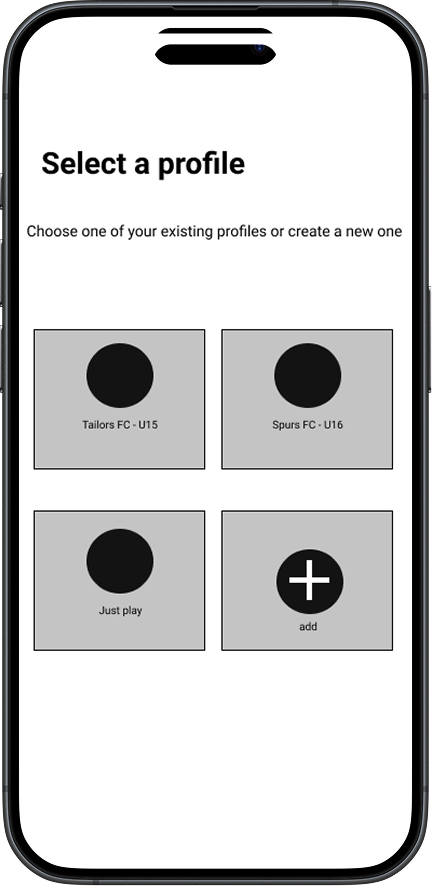
After receiving feedback from the rest of the team, I produced a second iteration of the wireframes.
After a few iterations, which were discussed with the design, tech, and product management team, we landed on the design that we would move forward with.
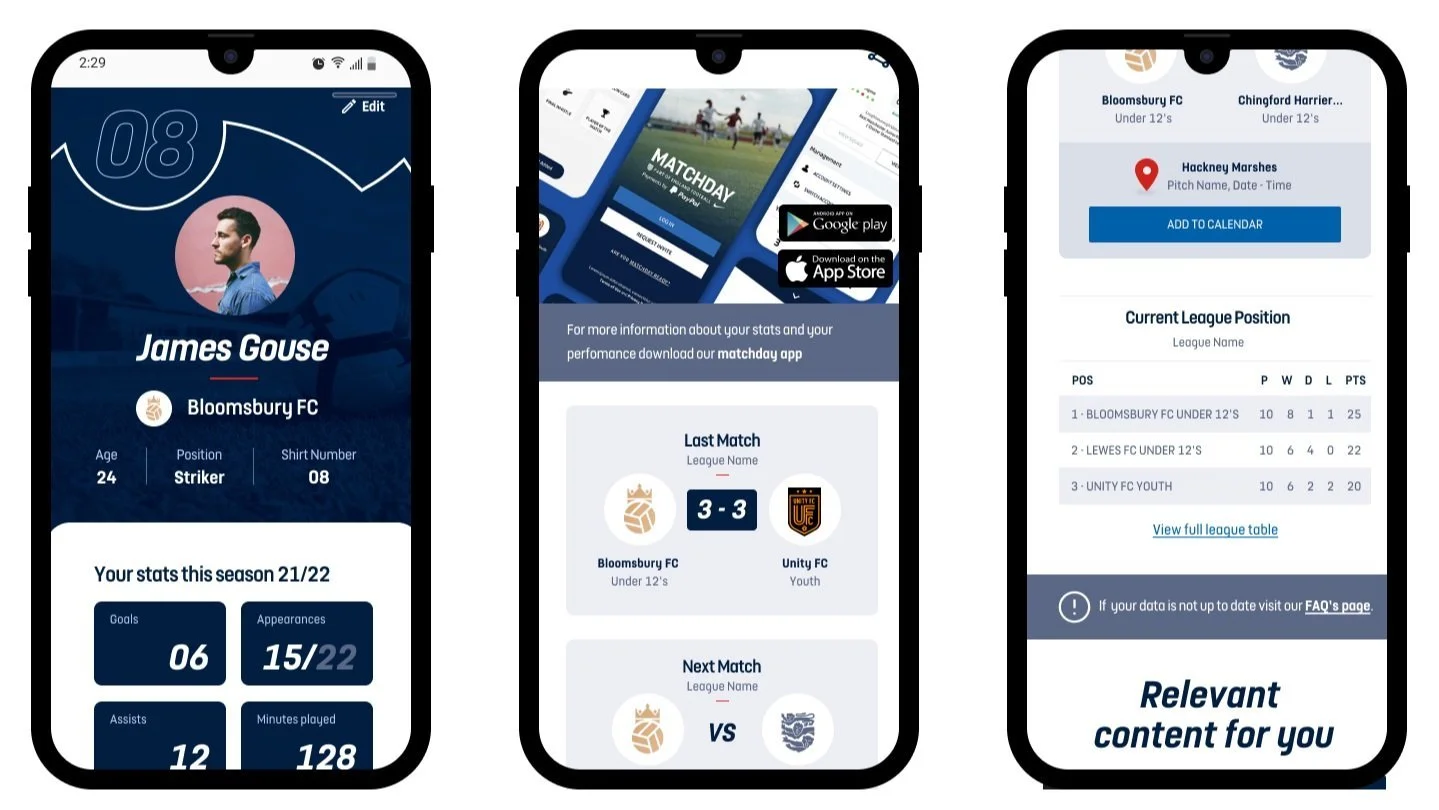
I then worked closely with the visual designer to turn the wireframes into high fidelity designs. I also worked with the content strategist to define what relevant content could be surfaced in a section of the profile with tips and tricks.
Part 3 - Validation and iteration
1. Initial feedback from the product manager and FA stakeholders
As soon as the designs were in a good enough spot to share, I teamed up with the Product Manager to organize a show and tell with the FA stakeholders. I walked them through the design concepts to keep everyone on the same page and to get their take on the direction we were heading.
While I was presenting, I made sure to capture all their feedback and the main points we discussed. We ended up making a few tweaks to the designs based on that input, but overall, the stakeholders were really happy with the results we showed them.
2. Testing with real users
After getting the designs ready, the visual designer and I built a prototype so I could test it out with real users. These sessions were great for getting honest feedback and seeing how people actually interacted with the pages.
The testing highlighted a few spots where the content wasn't quite clear enough and the signposting was a bit confusing, so we went back to the designs to sharpen the information hierarchy and make everything easier to navigate. We then ran a second round of testing, which went much better—users understood everything much more clearly, which gave us a lot of confidence that we were finally on the right track.
Prototype 🔗 link
Impact
While delivery priorities shifted, the project created foundational assets that extended beyond its original scope.
Reusable data structures for player and coach profiles
Validated approach to performance data visibility
Gamification boosted engagement
These were leveraged to shape the Football Coaching Profile, ensuring continuity and faster time to value.